The Most Common Stains That Require Professional Cleaning

Common stains are something that almost everyone encounters at some point. Whether it is a coffee spill on a white shirt, grease on a suit, ink on a blouse, or wine on an expensive dress, stains are an unavoidable part of everyday life. While many minor stains can be treated at home, some require professional cleaning to prevent permanent damage and ensure the best possible results.
Many people make the mistake of attempting to remove difficult stains using household products or aggressive scrubbing techniques. Unfortunately, these methods can often make the problem worse by spreading the stain, damaging the fabric, or permanently setting the contamination into the fibres.
Professional cleaners have the experience, equipment, and specialised products needed to treat difficult stains safely. Understanding which stains require expert attention can help protect valuable garments and extend their lifespan.
In this guide, we will examine the most problematic stains, explain why they are difficult to remove, and explore how professional cleaning helps restore garments while protecting fabric quality.
Why Common Stains Often Require Professional Treatment
Many common stains appear simple at first but become increasingly difficult to remove over time.
Different contaminants interact with fabrics in different ways. Some stains remain on the surface, while others penetrate deeply into fibres and bond with the material. Heat, moisture, and incorrect cleaning products can further complicate the removal process.
Professional cleaners understand the chemistry behind stain removal. They identify the type of contamination and select the most appropriate cleaning method based on both the stain and the fabric involved.
This targeted approach greatly improves the chances of successful stain removal while reducing the risk of fabric damage.
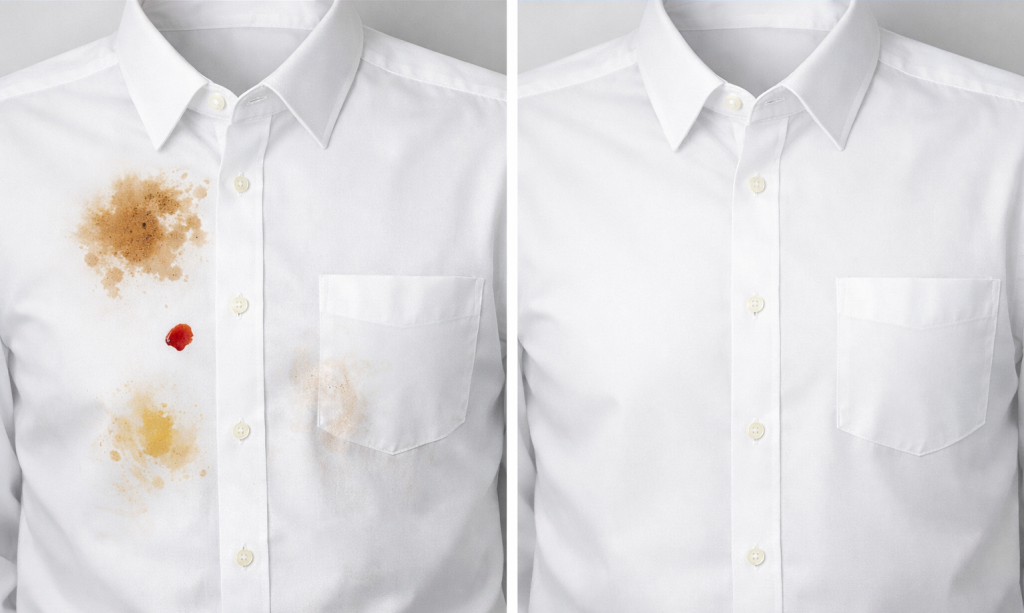
Common Stains Caused by Food and Beverages
Some of the most frequently encountered common stains come from food and drinks.
Coffee, tea, red wine, fruit juice, soft drinks, chocolate, sauces, and berries can all leave highly visible marks on clothing.
Many of these substances contain pigments, tannins, sugars, oils, or acids that bond strongly with fabric fibres. If treated incorrectly, the stain may become permanent.
Professional cleaning is particularly beneficial when dealing with delicate fabrics or expensive garments because it allows for controlled stain removal without excessive stress on the material.
Common Stains That Become Permanent Without Proper Care
One important reason common stains require professional cleaning is that many become permanent if not treated correctly.
When a stained garment is exposed to heat, such as from a tumble dryer or iron, the stain may become set into the fibres. Once this occurs, removal becomes significantly more difficult.
This is especially true for wine, coffee, blood, ink, and oil-based stains.
Professional cleaners often use specialised pre-treatment methods before the main cleaning process begins, helping prevent permanent damage and increasing the chances of complete stain removal.
Oil and Grease Stains
Oil and grease stains are among the most difficult contaminants to remove.
Unlike water-based stains, oils do not dissolve easily during normal washing. Cooking oils, butter, cosmetics, lotions, motor oil, and greasy foods can all penetrate deep into fabric fibres.
Many household stain removers struggle to break down these substances effectively.
Professional cleaners use specialised solvents designed specifically for oil-based contamination, making professional treatment highly effective for these types of stains.
Ink and Marker Stains
Ink stains often create significant challenges.
Pens, permanent markers, printer ink, and certain art supplies contain pigments formulated to resist fading and washing. This durability makes them difficult to remove from clothing.
Scrubbing ink often spreads the stain further across the fabric.
Professional cleaners use targeted solvents that help dissolve ink compounds while minimising damage to the garment.
This approach is often far safer than attempting aggressive stain removal at home.
Blood and Protein-Based Stains
Blood stains require special attention because they contain proteins that react differently than many other contaminants.
Using hot water on blood stains can actually worsen the problem by causing proteins to bond more firmly with fabric fibres.
Other protein-based stains include:
- Sweat
- Dairy products
- Eggs
- Bodily fluids
Professional cleaners understand how these stains behave and use appropriate cleaning methods to maximise removal success.
Their expertise helps reduce the risk of permanent discoloration.
Makeup and Cosmetic Stains
Cosmetic products are another frequent source of difficult stains.
Foundation, lipstick, mascara, concealer, and powders often contain pigments, waxes, and oils that create complex stains.
These contaminants can be particularly noticeable on light-coloured garments.
Because cosmetic stains often combine multiple substances, removal may require several treatment methods.
Professional cleaners can identify the components involved and apply suitable cleaning solutions accordingly.
Perspiration and Yellowing Stains
Perspiration stains may appear harmless initially but often become more visible over time.
Sweat interacts with body oils, deodorants, and antiperspirants to create yellow discoloration, particularly on white garments.
These stains may penetrate deeply into fibres and become increasingly difficult to remove.
Professional cleaning helps eliminate both visible staining and the residues responsible for future discoloration.
This helps preserve garment brightness and freshness.
Red Wine and Tannin-Based Stains
Red wine is one of the most feared stains among clothing owners.
Wine contains pigments and tannins that bond strongly with fibres, making removal challenging.
Tea and coffee create similar issues because they also contain tannins.
While immediate action can reduce damage, professional treatment often produces the best results, especially when dealing with delicate fabrics.
Specialised stain-removal techniques help minimise permanent discoloration.
Delicate Fabrics Require Extra Protection
Some garments are particularly vulnerable to stain-removal damage.
Silk, wool, velvet, satin, lace, suede, and designer fabrics often require specialised care even when stains are relatively small.
Aggressive home treatments may damage texture, colour, or garment structure.
Professional cleaning provides a safer alternative by using controlled processes tailored to the specific fabric.
This is particularly important for luxury and formal garments.
Why Home Stain Removal Often Fails
Many people assume that stronger cleaning products will produce better results.
Unfortunately, this is not always true.
Household stain removers may contain chemicals that react negatively with certain fabrics. Excessive scrubbing can also damage fibres and spread contamination further.
Bleach is another common mistake. Although it may brighten some white fabrics, excessive use can weaken fibres and contribute to yellowing.
Professional cleaning reduces these risks through expertise and specialised treatment methods.
Long-Term Benefits of Professional Stain Removal
Professional stain removal offers advantages beyond simply improving appearance.
It helps preserve fabric strength, colour consistency, texture, and garment structure.
Proper treatment also extends garment lifespan and reduces the need for replacement clothing.
This is particularly valuable for expensive garments, business attire, and formal wear.
Regular professional care protects both appearance and investment.
Sustainability and Garment Preservation
Restoring stained garments rather than replacing them supports sustainable fashion practices.
Professional cleaning helps keep clothing wearable for longer periods, reducing textile waste and lowering environmental impact.
Extending garment lifespan benefits both consumers and the environment.
This makes professional cleaning a practical and responsible choice.
Conclusion
Understanding which common stains require professional cleaning can help protect valuable garments and improve stain-removal results. Oil, grease, ink, blood, makeup, perspiration, wine, and deeply embedded contaminants often require specialised treatment that goes beyond ordinary washing.
Professional cleaners use advanced techniques, specialised solvents, and fabric-safe methods to remove difficult stains while preserving garment quality.
By seeking professional care when necessary, you can extend the lifespan of your clothing, maintain its appearance, and ensure that even the most challenging stains are treated as effectively as possible.